

 833-264-6620




 By: by Amino Science

It is easy to want to skimp on the workouts, especially when life gets busy, but cardio exercises are vital to your health. You can easily incorporate a cardio program into your weekly routine, dedicating 30 minutes of your time to a cardio activity 5 days a week or more.
Combined with a healthy diet (rich in amino acids), cardio training benefits your body and mind. Cardio exercises help you lose weight and lower your risk for conditions such as obesity, heart disease, high blood pressure, type 2 diabetes, metabolic syndrome, stroke, and certain types of cancer. Cardiovascular workouts strengthen your heart and keep your arteries clear. In addition to all these great benefits, cardio boosts your mood and keeps your mind sharp. Studies have even shown that regular physical activity may help protect memory and cognitive function.
First, let's figure out how much cardio you should engage in each week and pick the intensity that's right for you, and then let's get you started with some of the best cardio workouts!
The oft-cited Department of Health and Human Services exercise guidelines are as follows.
Keep in mind, those are the minimum suggestions, and more cardio exercise can lead to even greater health and fitness gains.
Those guidelines are all well and good, but where do we draw the line between low-intensity aerobic exercise, moderate-intensity exercise, and vigorous-intensity exercise? The parameters are guided by your heart rate.
First, determine your maximum heart rate. Subtract your age from 220. For instance, if you're 40 years old, 220 - 40 = 180, which is your maximum heart rate, or the average maximum number of heart beats per minute.
Then, figure out what you want your heart rate zone to be: low, moderate, or high intensity.
Here are the typical parameters for each:
A heart rate monitor is the easiest way to track your exercise intensity. Intensity, however, is subjective. So, you can also check in with how your body feels during cardiovascular performance.

In order to lose weight, you need to burn more calories than you take in each day, and aerobic exercise helps you achieve that goal. That being said, while you burn more calories with cardio, you burn more calories after a strength-training workout, which builds calorie-burning muscle. A cardio plus strength-training workout routine is the gold standard for both weight loss and weight maintenance. To get you started with weight loss, here are our favorite calorie-burning activities.
Walking is one of the easiest activities to incorporate into your daily routine. If you want to burn calories and lose weight, you need to walk at a brisk, moderately fast pace. According to Mayo Clinic, regular brisk walking can help you maintain a healthy weight, prevent illnesses, strengthen your muscles, and improve your mood. This steady-state cardio activity can help you burn 300 to 400 calories per hour.
Chances are you walk up and down the stairs every day to get to your office (and if you’re not, ditch the elevator and start climbing!), but did you know that stairs can help you burn up to 1,000 calories per hour? When you have a chance, look for a staircase near you that has more than one flight—consider walking, running, or lunging up a flight of stairs instead of running around your neighborhood to burn more calories.
The kettlebell is a cannonball-shaped weight that is used to build muscles and burn calories. Kettlebell workouts combine strength training with cardio for a complete, total body workout. According to the American Council on Exercise, kettlebells can provide a higher intensity workout than the usual strength training routine in a shorter amount of time. Kettlebells can help you burn 800 to 900 calories per hour.
Try this 10-minute kettlebell workout from Chris Freytag to have an idea of how it works.
Jumping rope is an excellent cardio exercise for weight loss because, in addition to burning 600 calories per hour, it builds bone density, strengthens your legs, and makes your heart stronger. You’d have to run an 8-minute mile to work off the calories you do when you jump rope.
Beginners are best off using a beaded rope because it is easier to control than a lightweight cloth or vinyl rope. You will need a 4-by-6-foot area and about 10 inches of space above your head. The exercise surface is also important—use a wood floor or exercise mat.
High-intensity interval training (HIIT) comes in many forms, but the goal is the same: high-intensity exercises for a short interval, then a brief recovery, and start again. During HIIT sessions, you should aim to work at 90% to 100% of your maximum heart rate. The high-intensity training increases the body’s need for oxygen, causing your system to burn more fat than lower intensity training burns. HIIT can help you burn around 600 calories per hour.
Cycling is an excellent way to strengthen your muscles and burn calories. You can bike outside to get fresh air, but you can also start an indoor cycling class. It's always fun to be in a room full of people who want to be healthy and motivate one another—plus the music will pump you up, and your instructor will help you achieve your goals. You can also buy a stationary bike and do this activity at home while watching your favorite TV show or reading the latest news. Cycling can help you burn 600 calories per hour.
We're all for a run, hike, or swim outdoors, but sometimes the easiest way to clock in your cardio is with a cardio machine. You can do 30 minutes of steady-state cardio or make it more high impact and build in a high-intensity interval workout on the elliptical machine. It's up to you and your fitness level how far and fast you want to push yourself.
As previously mentioned, cycling can be done outdoors or indoors—but indoor biking appears to especially benefit older people. According to the Arthritis Foundation, stationary cycling provides a workout that avoids stressing weight-bearing joints and reduces injury potential. Physical therapist Matthew Goodemote at Gloversville, New York’s Community Physical Therapy and Wellness program advises beginning with a 5-minute session 3 times a day and increasing the time by 5 minutes when the workout becomes comfortable.
Rowing is a full-body exercise that works the biceps, triceps, shoulders, back, glutes, quads, hamstrings, and core body. The American College of Sports Medicine suggests a 30-minute workout at a level that makes you sweat but still allows you to carry on a normal conversation at a minimum starting point. If rowing is your go-to cardio workout, then 5 days a week of rowing is a good goal. According to Harvard Health Studies, 30 minutes of rowing burns between 250-300 calories.
Treadmill and steppers are excellent replacements for walking or running when the weather is bad. Fast walking on the treadmill—approximately 3.5 miles per hour—burns 276 calories for a 160-pound person. Steppers provide aerobic activity and, when used as part of a daily cardio program, help burn approximately 446 calories per hour. According to the Centers for Disease Control and Prevention muscle-strengthening activities like steppers should be incorporated into your regular exercise cardio program.
What if you could go harder for longer? Enjoy more stamina and focus?
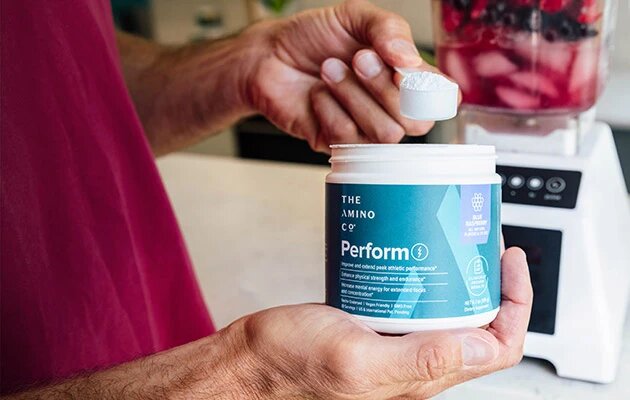
Perform, Amino Co's Athletic Performance blend is clinically proven to enhance strength, focus, and endurance for peak athletic performance. Add a scoop to 8 ounces of water and sip before, during, and after your workout. You're guaranteed to have 4 times the peak muscle response as compared to testosterone or HGH and decrease recovery time by quickly rebuilding muscle. Click here to learn more about how Perform can supercharge your cardio workouts!
Be the first to know about new craveable recipes and tips for living your best life.

Cardio training is an excellent way to stay healthy and lose weight, but strength training can give your weight-loss goals an extra kick—and it is more useful for building muscles than cardio workouts are. Check out the best strength training workouts for your back, shoulders, arms, legs, knees, chest, and abdomen.

The before, during, or after debate on amino acids for working out can leave you utterly confused as to when you should take your amino acid supplement. I’ll cover the details, but the quick and easy answer to the question should I take amino acids pre-workout is yes!
Sign up for our newsletter and let us know what you’re interested in, and you’ll also receive a free E-Book.
30 years of research... and still going.

Give us a try today.
If, for any reason, you don’t like us or our products, simply contact our support team within 60 days and we’ll happily refund you 100% of your payment.
It's our way of making sure you're completely happy with your purchase.

