

 833-264-6620




 By: by Amino Science
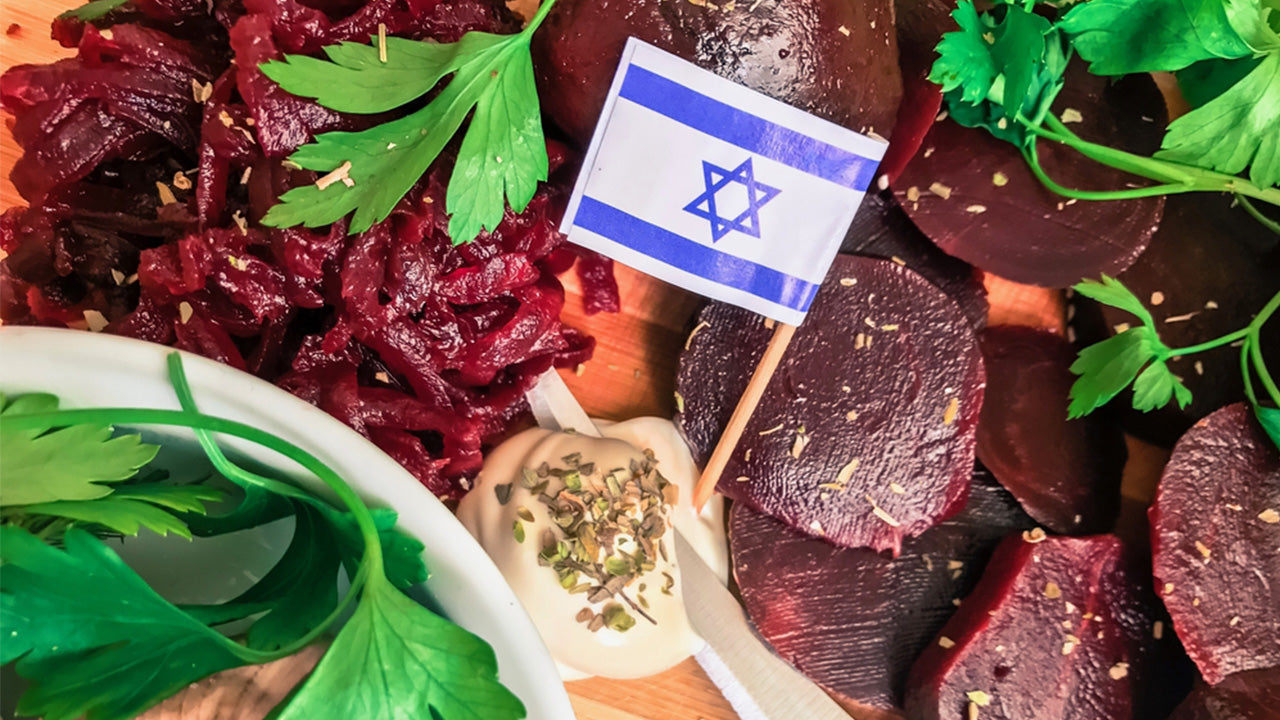
The laws of kosher define the foods that are fit and allowable for observant Jewish people to consume. In this article, we’re exploring these dietary laws, the acceptable and the prohibited foods, and the rituals involved with keeping kosher.
Kashrut, or Jewish dietary laws, were commanded by God to the children of Israel, and the laws were eventually transcribed into the Bible, the Mishnah, and the Talmud. For 4000 years, kosher living has been central to Jewish culture.
The kosher food market has seen quite remarkable growth in the last decade, as more and more people are turning to foods labeled kosher or pareve. Part of this increase is believed to be due to the rise in serious food-borne illnesses caused by unclean or mishandled foods.
Another segment of the population that is reaching for kosher foods are those with food allergies. Kosher foods must be clearly labeled meat, dairy, or neutral, which allows for quick identification of known allergens.
The Hebrew word “kosher” literally translates to “fit” in English. Observant Jewish people (those who adhere to Jewish dietary laws) believe that kosher laws benefit health and the humane treatment of animals, and shield against assimilation into communities and other religions. Kosher isn’t just about what Jewish people can and cannot eat. It is about tradition and closely held religious dietary laws. According to the most recent National Jewish Population study, only 21% of American Jewish people are kosher.
Kosher foods must meet complex and strict standards set by Jewish dietary law. All foods must be Kosher certified or approved in order to be considered safe for consumption. Kosher certification requires rabbis to audit the procedures involved in the killing, handling, production, and packaging of foods.
Keeping kosher isn’t just about the food you eat. It also dictates what foods can and cannot be eaten in combination with each other. And, according to The Society of Food Hygiene and Technology, kosher laws apply to non-food related products including food containers, cleaning products, cosmetics and beauty products, and even water softeners.
Jewish Dietary Laws can be complex and confusing for those not raised in the Jewish faith. Here are some of the kosher laws, quickly identified.
There are three main categories of kosher foods. Each category requires special handling and considerations in order to be considered kosher.
Kosher meats:
Kosher poultry/fowl:
Kosher dairy:
Kosher fish: Fish are considered Pareve, but they are never to be eaten with meat. Only fish with fins and scales can be consumed including:
Kosher grains: All grains are kosher except during Passover. However, all grains must be insect-free.
Kosher bread:
Kosher fruits and vegetables: All fruits and vegetables are kosher, but they must be carefully examined for insects.
Packaged foods: Must be labeled “Kosher Certified” and free from non-kosher additives, including some common vitamins and minerals.


| Pork | Rabbit | Squirrel |
| Bear | Dog | Cat |
| Camel | Horse | Catfish |
| Sturgeon | Swordfish | Shellfish |
| Reptiles | Amphibians | Insects |
| Cheese made with rennet | Hybridized foods including GMOs | Scavenger birds |
| Wild game | Milk, dairy & eggs from non-kosher animals |
Foods must be handled according to Jewish law from the time they are harvested to the time they are consumed. Here are some of the guidelines that must be followed to be kosher.
Meat and dairy cannot be cooked together or consumed together. These foods also require a total separation of preparation areas, table coverings, countertops, cutlery, dishes, utensils, cookware, dishwashers, stoves, and refrigerators. This is to ensure that cross-contamination never happens, as even the slightest transfer of residue from meat to dairy, or vice versa, deems a kosher food no longer kosher.
Allowable mammals must be slaughtered according to very stringent guidelines in order for the meat to be considered kosher. According to Jewish faith, God shared the methods of slaughter with Moses on Mount Sinai. Additionally, kosher meats require proper bloodletting and processing to meet kosher standards.
When shopping for kosher foods, it’s important to read labels very carefully. There can be many additives in dairy, meat, and other non-kosher foods, including gelatin from a non-kosher animal.
Even preserved fruits and vegetables can present a problem when keeping kosher. If a food is made with lactic acid, it’s considered dairy and not suitable for meals with meat. Lactic acid is commonly found in olives and pickles.
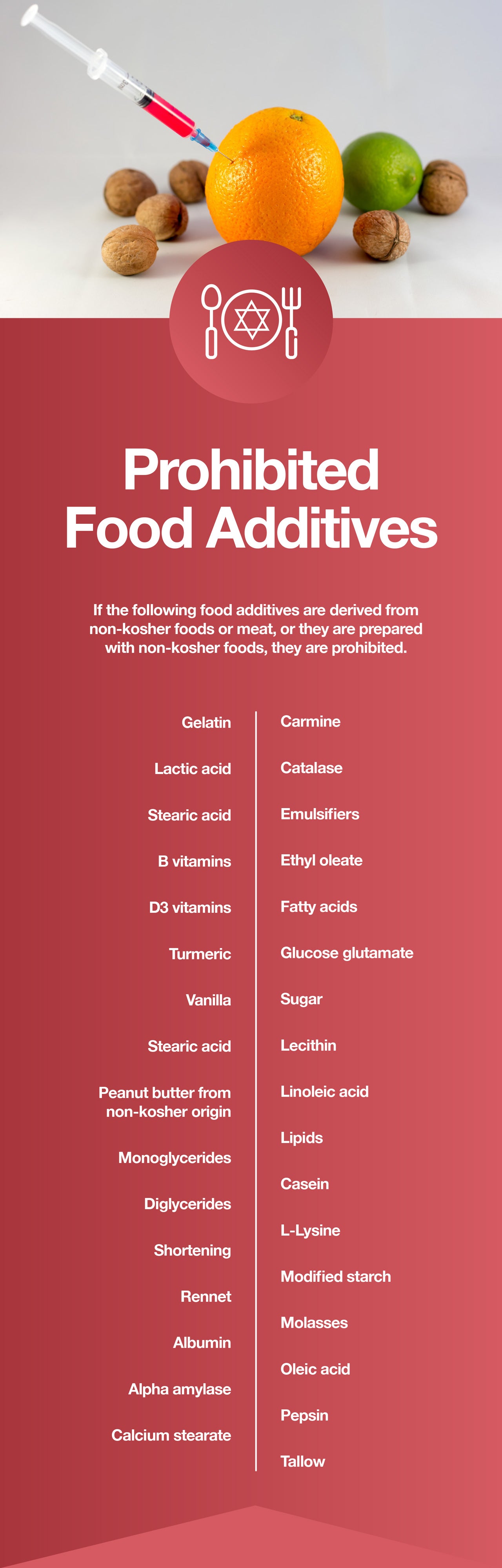
Other prohibited additives include:
| Stearic acid | Peanut butter from non-kosher origin | Monoglycerides |
| Diglycerides | Shortening | Rennet |
| Albumin | Alpha amylase | Calcium stearate |
| Carmine | Catalase | Emulsifiers |
| Ethyl oleate | Fatty acids | Glucose glutamate |
| Invert sugar | Lecithin | Linoleic acid |
| Lipids | Casein | L-Lysine |
| Modified starch | Molasses | Oleic acid |
| Pepsin | Tallow | Turmeric |
| Vanilla | B vitamins | D3 vitamins |
If you are wondering what is kosher salt and how is it different from table salt or sea salt, you aren’t alone. Kosher salt crystals are actually larger than other salts, rendering them ideal for pulling moisture out of meat. Originally, kosher salt was called koshering salt as it was used in the processing of meat to make it kosher.
Today it is generally just referred to as kosher salt, and it is the go-to salt for chefs around the globe. This is due to its crystal size and the fact that kosher salt has a cleaner flavor because it is iodine-free. As a note of caution, read the labels of kosher salt carefully, as some companies are now adding anti-caking agents that change the flavor and the texture.
Eating foods certified kosher offers a number of health and ethical benefits including:
When friends and family members are kosher and you aren’t, a little compromise may be in order to meet their needs. The best way to ensure comfort for all involved is to have open conversations about kosher foods, handling, and processing.
When eating out, allow your kosher friends and family to choose a certified kosher restaurant in your area so they are free to join you in a meal. If you are having a celebration at home, be sure that those following kosher laws know they are welcome to bring whatever they need to adhere to their beliefs.

Be the first to know about new craveable recipes and tips for living your best life.
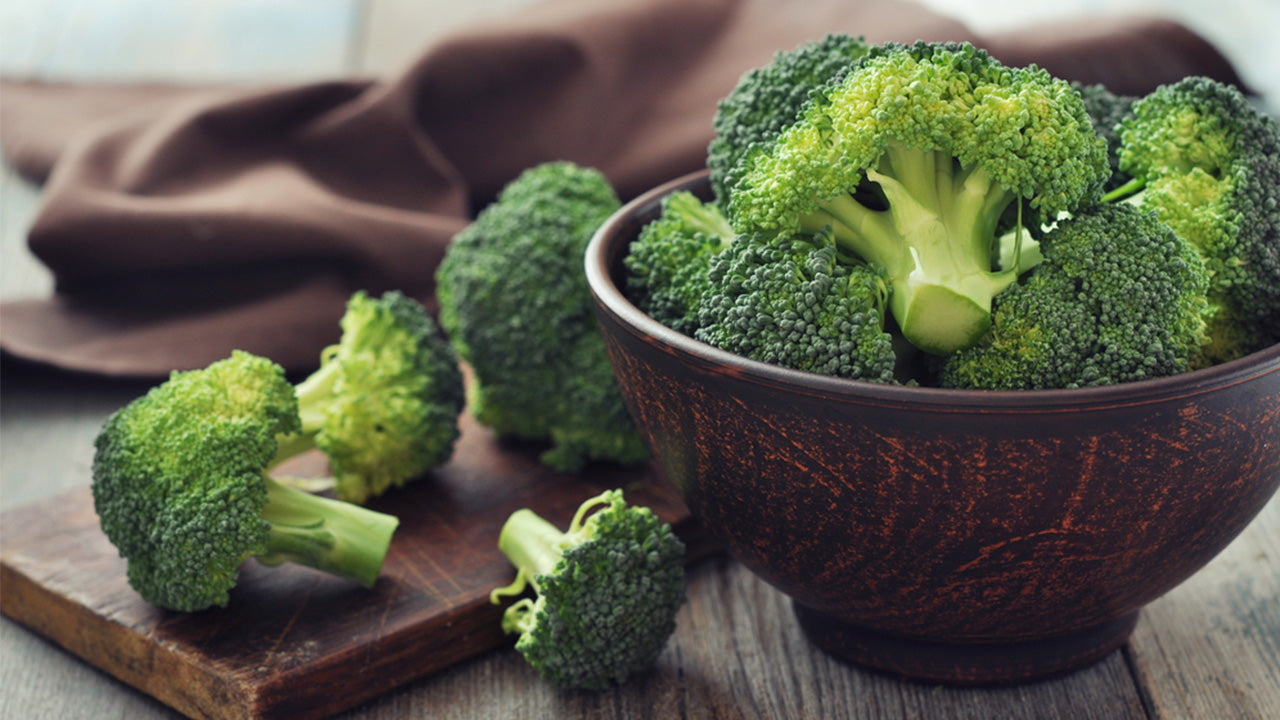
In this article, we probe the connection between broccoli and cancer prevention, why you may want should seek out broccoli’s lesser-known younger relative instead, and the best way to prepare this cruciferous vegetable to enjoy the full anti-cancer benefits of broccoli.
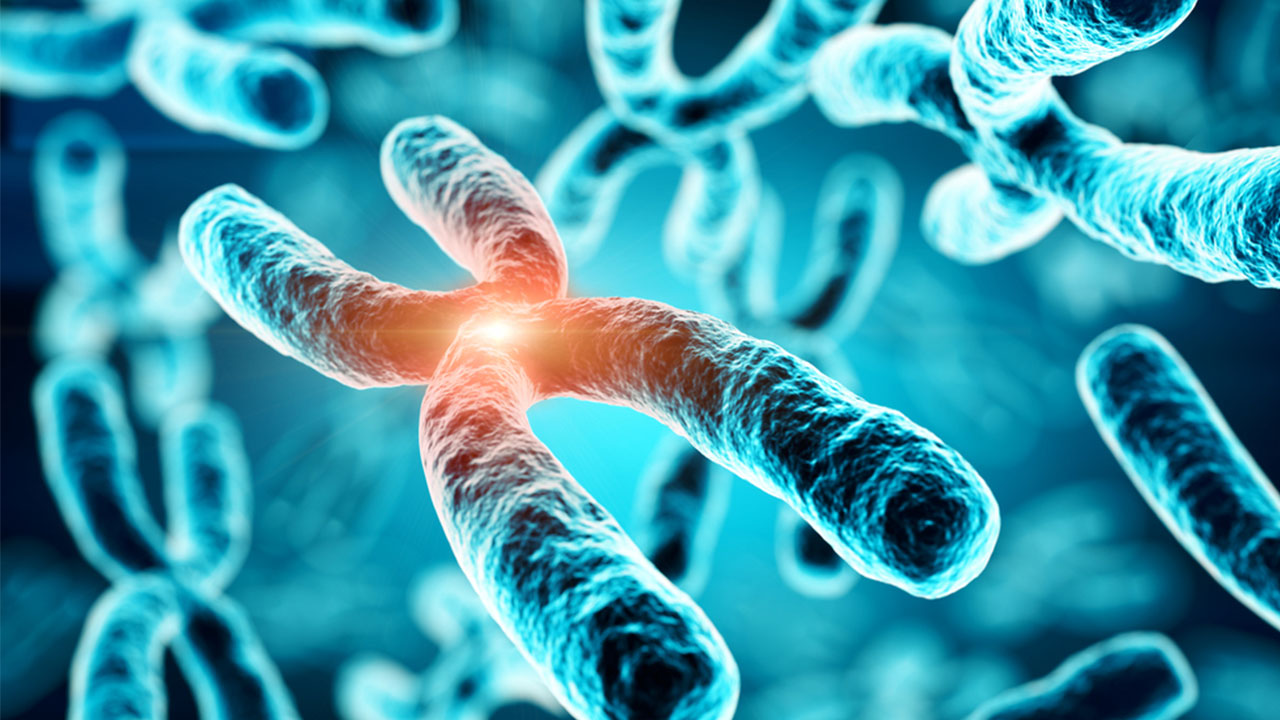
Epitalon can influence gene expression, extend telomere length, and produce other exciting physiological effects that have what experts call "geroprotective" results. It may be too soon to make definitive statements about epitalon but the findings so far certainly give a justification for further investigation.
Sign up for our newsletter and let us know what you’re interested in, and you’ll also receive a free E-Book.
30 years of research... and still going.

Give us a try today.
If, for any reason, you don’t like us or our products, simply contact our support team within 60 days and we’ll happily refund you 100% of your payment.
It's our way of making sure you're completely happy with your purchase.

