

 833-264-6620





 By: by Dr Robert Wolfe
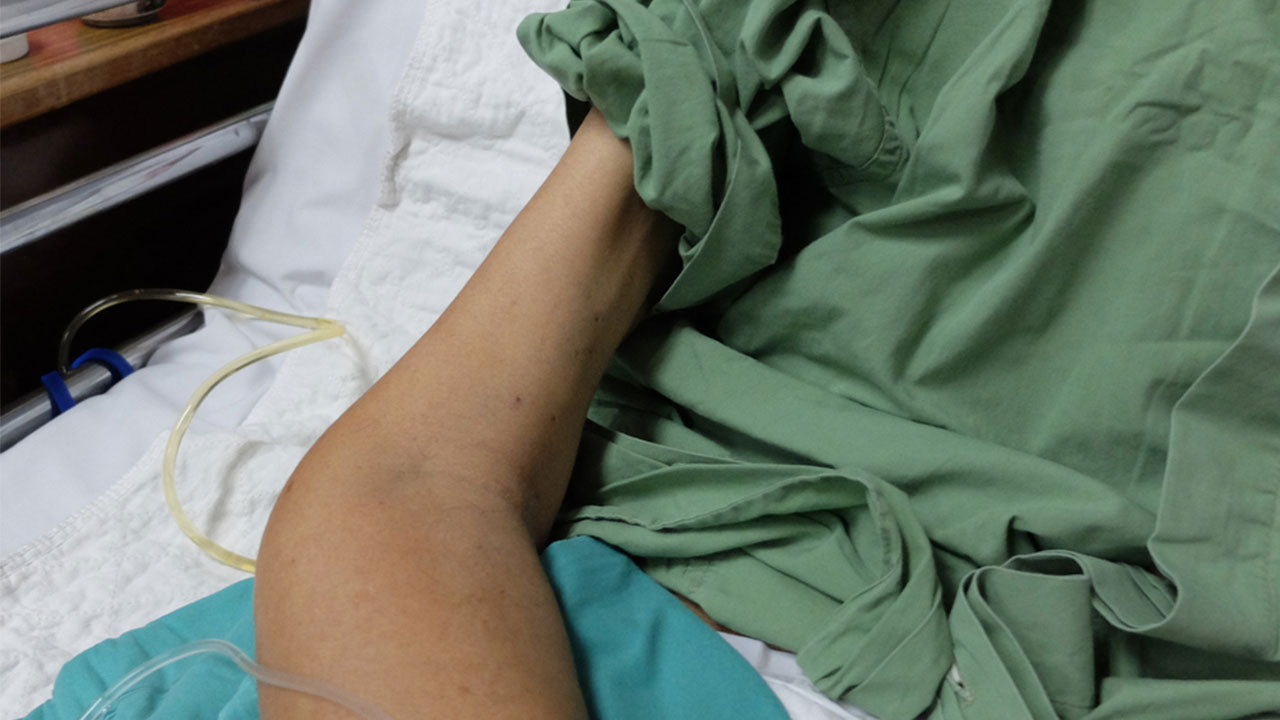
One way to think about cachexia is as the last illness. This metabolic disorder causes muscle wasting and involuntary, extreme weight loss, as well as temporal wasting. Cachexia occurs in the final states of almost every serious disease, including cancer, heart disease, HIV, and multiple sclerosis.
According to experts, approximately 9 million people around the world have cachexia. A 2016 estimate placed the number of cachexia diagnoses among individuals admitted to hospitals in the United States at 160,000 per year. Despite the staggering number of individuals affected by cachexia, doctors have historically focused on treating the underlying disease, rather than cachexia itself.
However, as we entered the twenty-tens, scientists began to examine cachexia as not just a symptom, but a condition that could itself be treated. Early studies showed that inflammation and metabolic imbalances drive cachexia, pointing the way to potential treatment approaches.
One of the challenges in treating cachexia is that it can be challenging to diagnose, particularly in the early stages when interventions are most likely to result in increased quality of life.
In this article, we'll cover what causes cachexia, how to recognize temporal wasting and other symptoms of cachexia, and available treatments for cachexia such as targeted amino acid supplementation.
Cachexia is a complex condition with no single cause. The term comes from the Greek words "kakos," meaning bad, and "hexis," meaning condition—and indeed, those with cachexia are in overall bad condition. This makes it challenging not only to tease out the factors that cause cachexia, but also to define the condition clinically. Though Hippocrates is widely acknowledged as the first to describe cachexia, a formal medical definition—which includes the loss of 5% or more of a person's bodyweight over the course of a year as well as declining muscle strength—was not developed until 2006.
Scientists do know that in addition to altered levels of key bioactive substances, a primary force behind the development of cachexia is increased muscle protein breakdown which, in conjunction with decreased muscle protein synthesis, results in muscle atrophy, or muscle loss.
Other processes known to contribute to cachexia include systemic inflammation and elevated energy expenditure.
A number of factors contribute to cachexia, including the levels of these substances, the conditions that cause them, and the reaction they provoke from the body.
As touched on in the introduction, cachexia commonly develops during the last stages of serious diseases. That means individuals with the following conditions are all at risk of developing cachexia as their diseases progress:
If you or a loved one has one of the conditions listed above, consider having a conversation with your doctor about preventative steps you can take to avoid cachexia and safeguard your quality of life.

Many of the symptoms of cachexia overlap with the symptoms of other conditions, including the very conditions that cause cachexia to develop. This can make it difficult to differentiate between true cachexia and other issues.
Some telltale indicators of cachexia include:

Many of the symptoms of cachexia overlap with the symptoms of other conditions, including the very conditions that cause cachexia to develop. This can make it difficult to differentiate between true cachexia and other issues.
To further complicate matters, doctors don't agree on the threshold at which muscle wasting becomes extensive enough to be considered cachexia. The definition of cachexia settled upon in 2008—"a complex metabolic syndrome associated with underlying illness and characterized by loss of muscle with or without loss of fat mass”—largely hinges on presence of muscle loss either in the absence of, or that outpaces, fat loss.
Even mild muscle loss, which commonly accompanies the aging process, produces some feelings of increased weakness and fatigue. It can also make it more difficult for individuals to carry out the activities of daily life.
Most experts concur that the best approach for determining when muscle wasting has become significant enough to constitute cachexia involves quantifying:
In the early 2010s, some researchers proposed that imaging techniques like MRI (magnetic resonance imaging) could be valuable tools for diagnosing cachexia.
At this time, doctors continue to use a variety of criteria for diagnosing cachexia. The most common lists the following diagnostic points:
Because loss of muscle strength and muscle mass often occur slowly and in tandem with chronic diseases and/or the aging process, cachexia diagnoses tend to happen once widespread muscle wasting has transpired. This eliminates the best window of opportunity for halting the progression of cachexia and securing an improved long-term quality of life.
Unfortunately, the patients under the closest medical observation often fare the worst, as hospitalization can instigate or exacerbate malnourishment, which in turn furthers the progression of cachexia. When a patient's nutrient intake declines, longer hospital stays and worse outcomes tend to follow.
Conventional medical treatment plans are not designed to encourage the recognition of early signs of muscle wasting. The more pronounced the wasting becomes, the lower the efficacy rate for interventions.
In an effort to combat this, researchers developed guidelines for a condition termed "pre-cachexia," which are as follows:
Hopefully, the establishment of these guidelines will lead to greater recognition of early signs of muscle wasting. Even minor changes to body mass or appetite among those with chronic diseases can be indicators that something has gone awry, and should, therefore, be taken seriously. The sooner these symptoms are noted and addressed, the better the treatment results will be.

As cachexia progresses, it can seriously impact a person's overall health. Muscle wasting, in particular, can significantly decrease longevity. According to a 2017 study, cachexia correlates strongly with survival and has been found to contribute to 20% of cancer fatalities.
In general, complications associated with cachexia include:
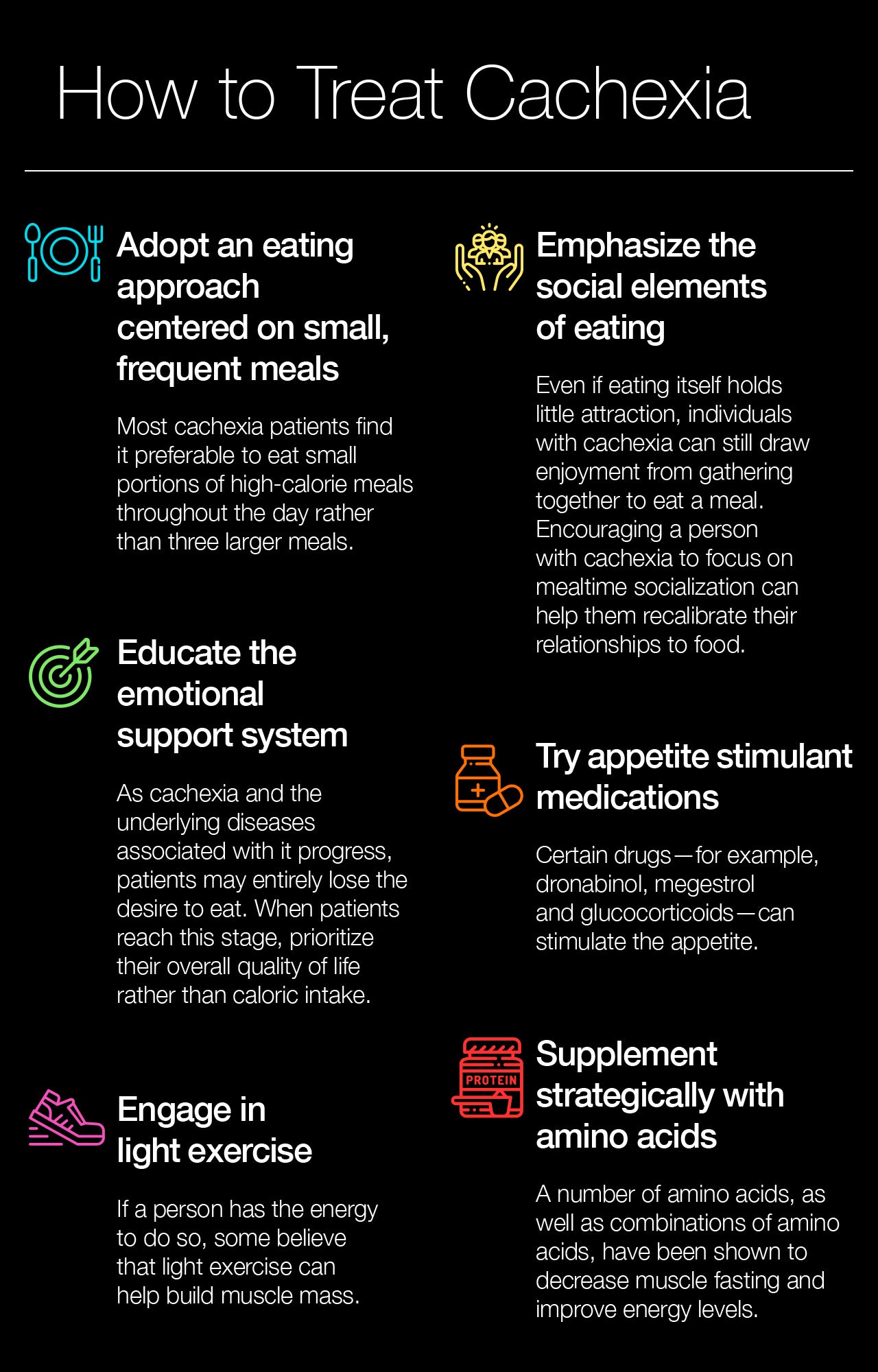
Because so many separate factors coalesce to cause cachexia, treatment typically involves multiple types of therapy. While it can be tempting to believe that simply encouraging a person to eat more, or to change the foods they eat, will halt the loss of body mass caused by cachexia, that will not produce the desired results.
According to doctors, dietitians, and other experts, the following steps can be valuable parts of a cachexia treatment plan.
Researchers have found that certain nutritional interventions can help to both treat and prevent muscle wasting. Given the paramount importance of amino acids for muscle growth, it should come as no surprise that strong evidence indicates that whey protein, as well as glutamine, arginine, and leucine, can help individuals with cachexia maintain and even increase their muscle mass.
Studies support the use of whey protein to build muscle. Whey, considered to have one of the best amino acid profiles of any natural protein, provides a wealth of amino acids that play active roles in muscle synthesis, including all three branched-chain amino acids (BCAAs): leucine, isoleucine, and valine. Multiple studies have shown that supplementing with whey protein can result in increased protein synthesis. Furthermore, the increases associated with the use of whey protein are greater than those linked to the use of casein or soy. That said, it's not uncommon for these studies to have participants enroll in an exercise program, making it somewhat unclear whether the muscle mass increases stem from the whey protein, the exercise program, or the combination of the two.
Interestingly, carnitine, an amino acid derivative, can not only stimulate muscle protein synthesis but also increase energy production, thereby alleviating the ill effects of cachexia on two levels. Several studies have found that cancer patients with cachexia tend to have low levels of carnitine, and that supplementing with 2 to 6 grams of carnitine can help reduce fatigue and increase lean body mass.
A 2006 study conducted by an Italian research team found that taking 2 grams of L-carnitine 3 times each day for a month led to an average muscle mass gain of 4.4 pounds, significantly decreased fatigue, and markedly improved quality of life. Other studies done with cancer patients also found that supplementing with carnitine led to increased muscle mass and decreased fatigue.
As you may be aware, amino acids work in concert to orchestrate myriad essential physiological functions, including protein synthesis. Thus, while certain amino acids have been shown to be uniquely beneficial for the treatment of cachexia, it appears that supplementing with well-balanced blends of multiple amino acids produces better results than supplementing with a single amino acid.
For instance, the use of leucine in combination with glutamine and arginine can bring about lean muscle mass gains in individuals with muscle wasting. A study published in The Journal of Parenteral and Enteral Nutrition showed that a mixture of leucine, glutamine, and arginine given in two divided doses each day led to an average weight gain of 5.6 pounds of lean muscle mass compared to an average weight loss of 1.5 pounds of lean mass for those taking the placebo. Study participants, all of whom had HIV and documented weight loss of at least 5% of body mass over the previous 3 months, were randomly assigned to receive the amino acid mixture or the placebo. The study authors tracked their body weights, lean body mass, and fat mass using air displacement plethysmography and computerized tomography (CT). After 8 weeks, the researchers found that supplementing with the amino acid blend could "markedly alter the course of lean tissue loss" as well as improve immune status.
Studies done with cancer patients and other populations found similar results in terms of muscle mass gains.
Research supports the idea that the use of amino acids to treat cachexia should include a well-formulated blend of essential amino acids. This ensures the body has all the raw materials necessary to carry out muscle protein synthesis at the highest rate possible. Only a small amount of amino acids—say, a 3-gram dose—is needed to bring about this effect.
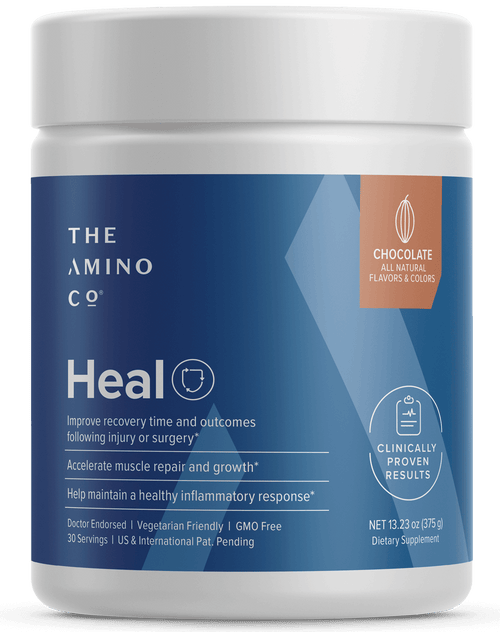
I recommend Heal, a patented nutritional intervention with the precise concentration of amino acids to help in cachexia cases. You can find Heal here.
Cachexia, a frequently irreversible side effect of many major illnesses, causes severe muscle wasting. The accompanying rapid loss of muscle mass can undermine a person's overall health and even shorten their lifespan. Diagnosing cachexia is quite tricky, as symptoms such as temporal wasting overlap with those of the underlying conditions associated with it. Furthermore, it often accompanies the end stage of those diseases.
Cachexia is complex condition, and though it is intimately intertwined with the progression of the underlying disease, treating it requires a separate, multilevel approach. In addition to lifestyle-related shifts such as eating small, frequent meals, supplementing with amino acids has been shown to slow the rate of muscle mass loss as well as the fatigue caused by cachexia.

Be the first to know about new craveable recipes and tips for living your best life.
Lower respiratory tract infection is often used as a synonym for pneumonia. However, this condition can refer to a host of illnesses affecting the airways below the larynx. Read on for the types, causes, and treatments of LRTIs.

Hypertension occurs when blood pressure is consistently too high. What is the high blood pressure heart disease connection? Find out here!
Sign up for our newsletter and let us know what you’re interested in, and you’ll also receive a free E-Book.
30 years of research... and still going.

Give us a try today.
If, for any reason, you don’t like us or our products, simply contact our support team within 60 days and we’ll happily refund you 100% of your payment.
It's our way of making sure you're completely happy with your purchase.

